What Does an Interior Designer Actually Do? A Look Inside the Room Edit Process
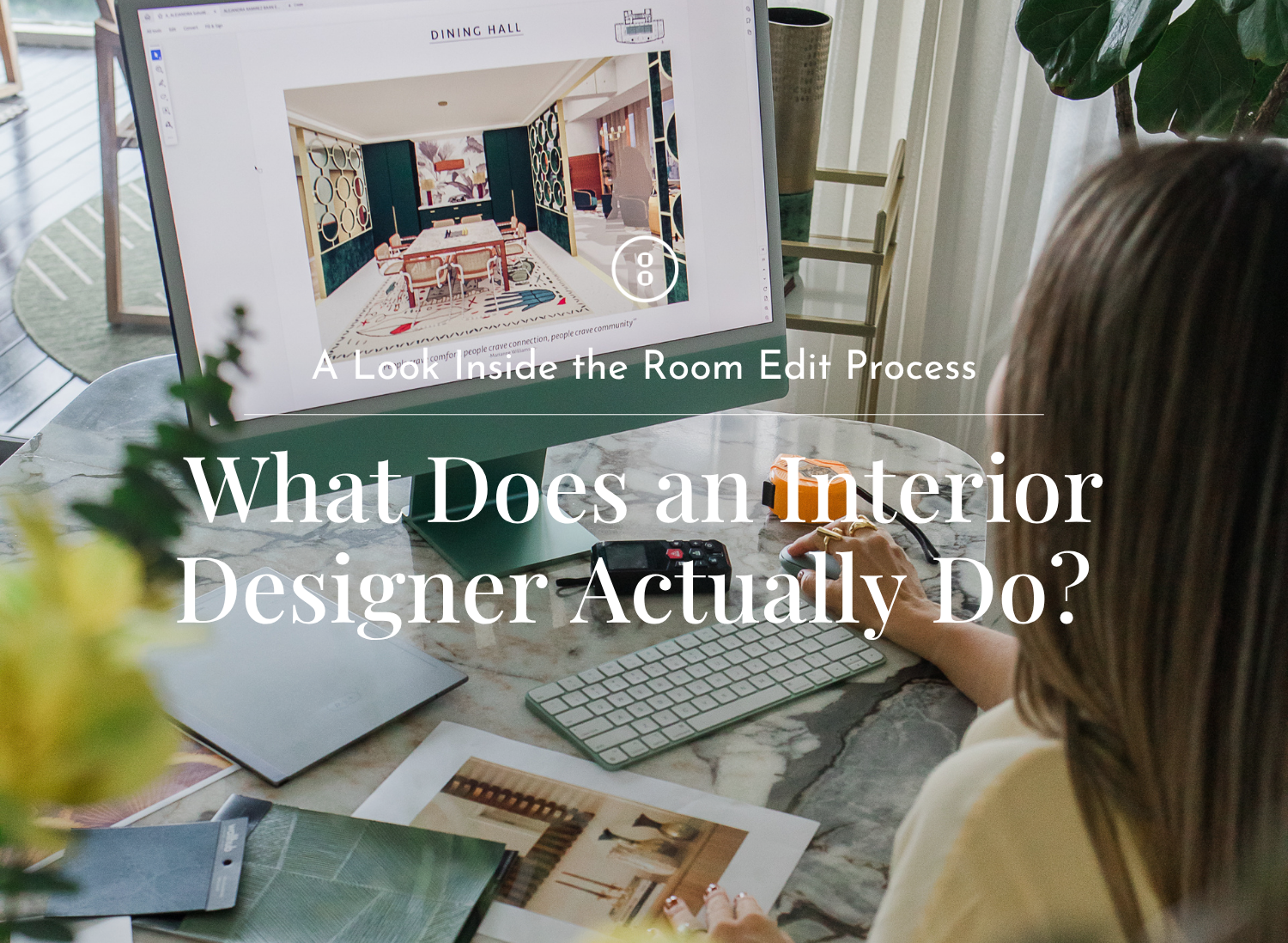
If you've ever stood in the middle of a room that doesn't quite work — furniture that feels too big, a layout that blocks the light, pieces you love but can't figure out how to bring together — you've probably wondered whether hiring an interior designer might help.
And then the next question arrives: What would they actually do?
It's a fair question. Interior design can feel opaque from the outside. You see the finished rooms on Instagram, but not the thinking, the documentation, or the decisions that shaped them. You're not sure what you'd be paying for, or whether the process would feel helpful or just add more complexity to an already overwhelming task.
So let me walk you through it — not as a generic explainer of what interior designers do, but as a close look at what a thoughtful residential design process actually protects: clarity, cohesion, better decisions, and a more considered investment in your home.
This is how the Room Edit works at Popcorn Interiors, and why each stage exists.
What the Room Edit Is (and Isn't)
The Room Edit is a structured design service for clients who want professional creative direction and sourcing support, but prefer to purchase and implement the design themselves, at their own pace.
It's not decorating advice or a mood board you try to recreate. It's a complete design plan — documented, considered, and tailored to how you live — so that when you're ready to move forward, you know exactly what to do.
You'll receive floor plans, wall elevations, concept boards, and a detailed shopping list with every product specified: dimensions, price, lead time, supplier, link. The goal is clarity, cohesion, and confidence in your decisions, and fewer expensive mistakes along the way.
Stage 1: The Welcome Questionnaire
Before we meet, I send you a detailed questionnaire, and it's comprehensive by design. I ask about your daily routines: how you use each room, whether you work from home, whether you host often or prefer quiet evenings, how your children play, what time of day you spend in each space. I ask what frustrates you about your current setup, what you want to keep, and what you're ready to let go of.
I also ask about your design preferences — colours you're drawn to, styles that resonate, spaces you've loved in the past — but good interior design goes far beyond decoration. It is thoughtful problem-solving shaped around your routines, needs, and the feeling you want your home to hold.
The questionnaire is the whetstone that sharpens the brief. It prevents the most common mistake in residential design: starting with what looks good instead of what actually needs to happen in the space.
Most clients come to me knowing they want help, but they haven't yet articulated what their home needs to do for them on a functional, emotional, and practical level. The questionnaire draws that out, so by the time we meet, I'm already thinking about your project with the right lens.
Stage 2: The Design Consultation
We sit down — either in person or over Zoom — and talk through your answers. I ask follow-up questions, and we explore the function of each area, your design tastes, your goals, and your daily rhythms. It's not just about how the space looks; it's about creating a home that supports your well-being, brings ease to your day, and makes you feel grounded, inspired, and at home.
This conversation shapes everything that follows. It's where I begin to understand not just your aesthetic, but your priorities: what matters most, what can flex, where the design needs to work hardest.
Without this clarity, you end up with a beautiful room that doesn't actually support how you live. The consultation prevents that disconnect. By the end of this session, we both have a clear sense of direction, and you're no longer guessing what you need.
Stage 3: The Site Survey
Next, I visit your home. I take measurements, photograph the space, and note the light at different times of day, the flow between rooms, the architectural details, the existing furniture you want to keep. I look at how you move through the space, where the bottlenecks are, where there's wasted potential, what the room is trying to tell me about how it wants to be used.
The site survey reveals what photos and measurements alone cannot: the feel of the space, the scale, the quirks, the opportunities. This is not something you can replicate with an online floor plan tool or a tape measure. I've lost count of how many times a client has told me they thought a certain sofa would work, only for me to stand in the room and see immediately that the proportions are off, or the layout blocks a key sightline, or there's a better way to use the corner they've been ignoring. The site survey prevents costly purchases that don't fit — not just physically, but spatially and visually.
Stage 4: Floor Plans and Wall Elevations
Once I'm back in the studio, I translate everything into 2D plans. The floor plan shows the layout: where each piece of furniture sits, how the room flows, how much clearance you have around key pieces, where the circulation paths are. The wall elevations show what you'll see when you walk into the room, including the height and placement of artwork, shelving, lighting, window treatments.
This is where we solve for function first — the sofa that might be blocking the door, the dining table that seats six but leaves no room to pull out the chairs, the rug that's too small to anchor the seating area.
These are the mistakes that cost money and create frustration, and the floor plan prevents them. The elevations give you a sense of proportion and help you visualise the finished space before you commit to anything. Together, these drawings reduce guesswork and give you confidence that what you're about to purchase will actually work in your home.
Stage 5: The Concept Board
This is where the design direction becomes visual. The concept board includes colour schemes, material and finish selections, curated furniture and decor suggestions, and ideas for texture, pattern, and layering.
What we’re creating is a cohesive design narrative that shows how all the pieces work together — the sofa fabric, the rug, the lighting, the wall colour, the accessories. This is what makes a room feel intentional instead of assembled.
Many clients come to me with beautiful individual pieces, often from a past home, but no sense of how to make it all work together in a new layout. The concept board solves that. It gives you a clear visual language to follow, so every decision you make from this point forward supports the same direction. Without it, you're making isolated choices that may look good individually but don't add up to a resolved whole.
Stage 6: Professional Sourcing and the Shopping List
Once the concept is approved, I move into sourcing. I research suppliers, verify dimensions and lead times, cross-reference your budget, and make sure every piece I recommend is available, appropriate for Singapore's climate, and suited to your lifestyle.
Then I compile the shopping list — not a vague checkbox list of suggestions, but a detailed, organised document that includes product name and description, dimensions, price, lead time, supplier name and contact, and a direct link to purchase.
The list forms a practical bridge between design direction and action. It reduces decision fatigue and gives you a clearer path through the labyrinth of endless supplier websites. More than that, it protects you from uncertainty, from second-guessing whether something will fit or work, from discovering halfway through that the lead time is three months and now your timeline is derailed.
With this list in hand, you don't have to wonder if you're making the right choice. It's all there, clearly documented, so you can move forward with confidence. And because you're purchasing directly, you can introduce each piece into your home at your own pace — one month the sofa, the next month the lighting, and so on.
Stage 7: Design Revisions
We build in two rounds of revisions, which gives you the space to respond to the concept, ask questions, request adjustments, and refine the direction until it feels right. Maybe the rug colour needs to shift, or you want to explore a different dining table, or the layout needs a tweak to accommodate a piece you forgot to mention.
Design by nature is iterative, and your response to the concept is part of the process. The revisions give you room to shape the final direction so that when you move into purchasing, you feel confident and clear.
Stage 8: After Care Support
Within a month of wrapping your project, I offer up to one hour of post-design support via Zoom. This is your time to ask questions as you start implementing the design — maybe the sofa arrived and you're not sure about cushion styling, or you need advice on where to place the art, or you're debating between two paint samples and want a second opinion.
You still have access to guidance as everything comes together, which prevents small decisions from derailing the cohesion we've worked to create. It's a small thing, but it makes a big difference in how confident you feel bringing the design to life.
What This Process Protects
Here's what the Room Edit gives you that's difficult to achieve on your own:
Clarity, so you know exactly what to do, in what order, and why.
Cohesion, because every piece works together — the design was conceived as a whole, not assembled piece by piece.
Better decisions, because you're not guessing or impulse-buying; you're following a plan that's been tailored to your home, your budget, and your lifestyle.
Fewer expensive mistakes, because the wrong sofa, the too-small rug, the layout that doesn't work — these mistakes add up, and the Room Edit prevents them.
An overarching design narrative that’s more than a collection of nice things, but a space that feels intentional, personal, and complete.
Whom the Room Edit Is For
The Room Edit works well for those who want professional design direction but prefer to manage the purchasing and implementation themselves, who appreciate structure and documentation, who value cohesion and want their home to feel considered rather than assembled.
You might also be someone who is comfortable making decisions with guidance but doesn't want to be left guessing, and or you want to introduce pieces gradually over time.
Not Sure Where to Start?
If you're reading this and wondering if you need the full Room Edit or just some initial guidance, that's completely normal. That's why I offer a 2-Hour Design Consultation as a standalone service. During this session, I evaluate your space, discuss your goals, and provide creative ideas and practical solutions tailored to your home. You'll receive a written report with recommendations, supplier suggestions, and next steps.
For some homeowners, that's all they need. For others, it's the first step before moving into the full Room Edit. Either way, you'll leave with clarity and a plan.
Ready to Begin?
Your home should support the way you live, not work against it. If you're ready to move forward with intention, clarity, and a plan that's tailored to your space and your life, schedule your initial discovery call (hyperlink).
Let's create a home that feels like you.